


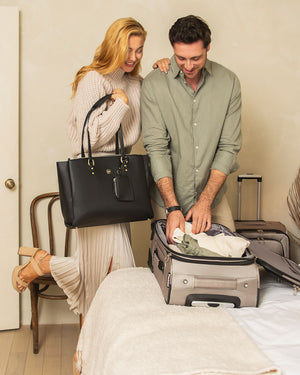


TL;DR: which bag should you bring?
Packing for a trip starts with one question: carry-on or checked?
If your trip is short, simple, and mostly predictable, carry-on luggage is usually the smartest choice. If your trip is longer, gear-heavy, formal, seasonal, or family-focused, checked luggage may make the journey easier.
Here's the practical version, the one this luggage guide is built around, whether you're packing a carry-on or a checked bag:
- 1–3 days: A personal item or compact carry-on is usually enough.
- 3–5 days: A carry-on works well if you pack intentionally.
- 5–7 days: A carry-on can work with smart packing strategies, versatile clothing, and limited shoes.
- 7–10 days: Checked luggage becomes more comfortable, especially if you need layers, extra footwear, or event clothing.
- 10+ days: Checked luggage is usually the better fit unless you plan to do laundry and travel very light.
- Family travel, business attire, winter trips, sports gear, or special events: Checked luggage often saves stress.
- Tight connections, short city trips, or travel where you want to skip baggage claim: Carry-on is often the better move.
Size isn't the whole story. The real decision comes down to how you move through the airport, what you need the second you land, how much you're willing to carry, and how much flexibility you want along the way.
The real difference between carry-on and checked luggage
At a glance, the choice seems simple: smaller bag or bigger bag. But the carry-on vs checked luggage decision affects nearly every part of your trip, from packing at home to moving through the airport to unpacking at your destination.
Carry-on bag: stays with you through security, onto the plane, into the overhead bin. It gives you direct access to your travel essentials and skips the wait at baggage claim. It also demands more disciplined packing, and it may run into airline size restrictions, weight limits, or scarce overhead bin space.
Checked bag: gets handed over before security and collected after you land. It gives you more room for clothing, shoes, toiletries, gifts, and gear. It can make the airport feel easier because you are not pulling a roller bag through every line, shop, and restroom. The tradeoff: checked luggage may come with airline fees, requires time at baggage claim, and is not with you during the flight.
Neither option is universally better. The right bag is the one that fits your itinerary, your packing style, and your tolerance for airport logistics.
When carry-on luggage makes the most sense
Carry-on luggage is ideal for travelers who value speed and simplicity. If you like landing and heading straight to the taxi stand, train platform, rideshare pickup, or hotel, a carry-on bag is hard to beat.
A carry-on is especially useful for:
- Weekend trips
- Business travel
- Domestic flights
- Short international stays
- Trips with tight connections
- Travelers who prefer to avoid baggage claim
- Minimalist packers
- Itineraries with multiple stops
- Destinations where you can do laundry
The biggest advantage is that your bag stays close. Your clothes, medications, electronics, documents, and essentials are with you from departure to arrival. That peace of mind matters, especially when you are traveling for an event, meeting, cruise, wedding, or any situation where a delayed bag could disrupt your plans.
Carry-on luggage also encourages cleaner packing decisions. You choose what you will actually wear, not every possible version of what you might need. It's the scenario carry-ons like the Summit Reserve are built around: durable shells, dependable wheels, and interior organization that earns its keep.
The limits of a carry-on bag
The main limitation is space. A carry-on can hold more than many people expect, but it cannot do everything. Most carry-on bags are best suited for a few days of clothing, a streamlined toiletry kit, one extra pair of shoes, and compact accessories.
For a typical traveler, carry-on capacity often looks like this:
- Two to three days: Easy with room for options.
- Four to five days: Very manageable with outfit planning.
- Six to seven days: Possible with packing cubes, repeat outfits, and laundry access.
- More than a week: Doable for experienced light packers, but not comfortable for everyone.
Shoes are usually the deciding factor. One extra pair is realistic. Two extra pairs can quickly take over the bag. Bulky sweaters, jackets, formalwear, camera equipment, and full-size toiletries also make a carry-on feel smaller fast.
A carry-on also requires attention to airline rules. Overhead-bin size requirements vary, and some fares may not include full-size carry-on luggage. On busy flights, overhead space can fill before every traveler boards. In that case, you may be asked to gate-check your bag, which means it leaves your hands even though you packed it as a carry-on.
That does not mean carry-on travel is risky. It simply means the best carry-on strategy is to pack as if space matters, because it does.
When checked luggage is the better choice
Checked luggage is best when comfort, capacity, and flexibility matter more than speed. If you are traveling for more than a week, packing for multiple climates, bringing gifts, or dressing for several types of occasions, a checked bag gives you breathing room.
A checked bag is especially useful for:
- Longer vacations
- International travel
- Family trips
- Winter travel
- Cruises and resort stays
- Weddings, conferences, or formal events
- Adventure travel with gear
- Trips where you need multiple shoes
- Travelers who prefer not to carry luggage through the airport
Checked luggage allows you to pack more complete outfits, larger toiletries, extra layers, and destination-specific items. It can also make the airport experience easier on your body. Once the bag is checked, you can move through security, shops, lounges, and boarding with only a personal item. A Signature Checked Spinner is made for exactly this kind of trip: reinforced construction, expandable capacity, and wheels that hold up under real weight.
For travelers with children, mobility needs, or long airport walks, that lighter-in-the-terminal feeling can be a real benefit. A well-designed checked bag with smooth-rolling wheels, durable handles, and organized compartments can turn a heavy packing list into a more manageable travel day.
The tradeoffs of checked luggage
The clearest tradeoff is time. Checking a bag usually means arriving at the airport earlier, waiting in a bag-drop line, and stopping at baggage claim when you land. If you are trying to make a meeting, catch a train, or start a weekend trip quickly, that added time can matter.
Cost is another consideration. Many airlines charge for checked luggage, though policies vary by carrier, route, ticket type, loyalty status, and destination. Some international itineraries include a checked bag, while some low-cost or basic fares may charge for almost everything beyond a small personal item. Before you decide, check your specific airline and fare rules, not just general advice.
Checked bags also leave your direct control. Most bags arrive exactly as expected, but delays can happen. That is why essentials should never go in checked luggage. Keep medication, travel documents, electronics, valuables, a change of clothes, and basic toiletries in your personal item or carry-on.
The best checked luggage strategy is not to treat the larger bag as unlimited space. Use the space thoughtfully so the bag stays organized, manageable, and within airline weight limits.
Carry on luggage vs checked luggage by trip length
The fastest way to decide is to start with the number of days you will be away, then adjust based on weather, activities, and your personal packing style.
For a weekend trip
A carry-on is usually more than enough. A Weekender Travel Tote or compact spinner can handle the whole trip on its own. Wear your bulkiest shoes on the plane, pack one extra outfit, sleepwear, toiletries, and a light layer. Done.
For a two-night trip, checked luggage is usually only necessary if you are bringing formal clothing, specialty equipment, or items for multiple people.
For a three- to five-day trip
This is the sweet spot for carry-on luggage. With a thoughtful packing list, you can bring enough clothing without feeling overly restricted. Choose versatile pieces that mix easily, limit shoes, and use packing cubes to keep categories separated.
A checked bag may still make sense if your plans include business attire, dress shoes, cold-weather layers, or several outfit changes per day.
For a weeklong trip
A carry-on can work, but it requires intention. Plan outfits before you pack. Rewear foundational pieces. Choose lightweight fabrics when possible. Bring travel-size toiletries. If laundry is available, a carry-on becomes much more practical.
Checked luggage becomes the more comfortable option if you want more variety, are traveling somewhere cold, or do not want to think carefully about every item.
For trips longer than a week
Checked luggage is often the better choice for most travelers, and the Cascade II Checked Spinners has the capacity and durability to prove it. It gives you room for extra clothing, shoes, weather layers, and souvenirs. You will still want a personal item with travel essentials, but the larger bag can carry the bulk of your wardrobe.
Experienced travelers can still manage long trips with a carry-on, particularly when moving between cities or using laundry services. But for many people, the effort required to make it work is not worth the space saved.
Ease of use: weight, wheels, and airport movement
The right travel bags should make movement feel natural, not cumbersome. Whether you choose carry-on or checked luggage, ease of use depends on more than capacity.
A carry-on is easier to lift into a car, roll into an elevator, and keep beside you in the airport. However, you may need to lift it into the overhead bin, maneuver it down narrow aisles, and pull it through crowded terminals. If it is packed too heavily, the convenience can fade quickly.
Checked luggage may be larger and heavier, but you handle it for less of the airport journey. Once it is checked, you are free to move with less weight. The key is choosing a bag with dependable wheels, a comfortable telescoping handle, and durable construction that can handle being transported through airport systems.
Spinner wheels are helpful in smooth airport terminals because they move in multiple directions and reduce strain on your arm and shoulder. Inline wheels can offer a steady pull on uneven surfaces. Handles should feel stable when extended, and side or top carry handles are useful when lifting the bag from a car trunk, baggage carousel, or hotel luggage rack.
Small design choices make a difference. A thoughtfully built bag does not just hold your things. It supports the rhythm of travel.
Practicality: control versus freedom
One of the most important differences between carry-on and checked luggage is the kind of convenience each one provides.
Carry-on convenience is about control. Your bag stays with you. You can access your items. You do not need to wait at baggage claim. If your flight changes, your bag changes with you. For travelers who value independence and efficiency, this is a major advantage.
Checked luggage convenience is about freedom of movement. You hand off the weight early and navigate the airport with less in your hands. You can move through security more comfortably, use airport restrooms more easily, browse a shop without pulling a suitcase, and board with less to manage.
The real question comes down to which type of convenience matters more for this trip: staying in control of your bag, or moving freely without it.
If you are connecting through a large airport with little time between flights, carry-on luggage may feel safer because it stays with you. If you have a long layover, children in tow, or a heavy packing list, checked luggage may feel easier because you are not responsible for the bag during every step of the journey.
Cost: bag fees, overhead space, and value
Cost can make the decision more complicated. Checked luggage often comes with a fee, but carry-on luggage is not always free either. Some fares include a full-size carry-on. Others allow only a personal item unless you pay more. Airline policies vary widely, so always review your fare before you pack.
The lowest-cost option is usually the one that avoids surprises. A bag that is too large, too heavy, or not included in your fare may cost more at the airport than it would have during booking. If you are unsure, measure your luggage, weigh it before you leave, and confirm your airline's current guidelines.
It is also worth thinking beyond the fee itself. A checked bag may cost extra, but it may prevent the need to buy forgotten items at your destination. A carry-on may save a fee, but it may limit what you can bring or require more careful shopping once you arrive.
For frequent travelers, value often comes from investing in versatile luggage that works across many trip types. A dependable carry-on, a spacious checked bag, and a well-organized personal item can cover most travel scenarios without forcing you into one packing style every time.
What should always stay with you
Even if you check a bag, your travel essentials belong in your personal item or carry-on. This is one of the most important rules in any luggage guide.
Keep these essentials with you:
- Passport, ID, and travel documents
- Wallet, credit cards, and cash
- Prescription medications
- Valuables and jewelry
- Laptop, tablet, camera, and chargers
- Essential toiletries
- Keys
- A change of clothes
- Glasses or contacts
- Important work materials
- Items needed during the first 24 hours of your trip
Think of your personal item as your travel safety net. If your checked bag is delayed, you should still be able to get through the first day with confidence.
Packing strategies for carry-on travelers
Carry-on packing rewards editing. The goal is not to pack less just for the sake of it. The goal is to bring the right things in the right combinations.
Start with a simple outfit formula. Choose a neutral base color, then add layers and accessories that work together. For example, one pair of pants can pair with multiple tops. One lightweight jacket can work for the plane, dinner, and cool evenings. Shoes should be versatile and comfortable enough to earn their space.
Helpful carry-on packing strategies include:
- Wear your bulkiest shoes and jacket on the plane.
- Use packing cubes to compress and organize clothing.
- Limit yourself to one extra pair of shoes when possible.
- Choose fabrics that resist wrinkles and can be reworn.
- Pack travel-size toiletries or buy basics at your destination.
- Roll casual clothing and fold structured pieces.
- Build outfits before packing individual items.
- Leave a little room for anything you pick up during the trip.
The biggest mistake is packing a carry-on as if it were a smaller checked bag. Pack it as a curated travel system instead. Every piece should have a purpose. A carry-on with built-in organizer compartments makes this easier: everything gets a place, so nothing gets crushed.
Packing strategies for checked luggage
Checked luggage gives you more room, but organization still matters. A larger bag can become frustrating if everything shifts, wrinkles, or disappears into open space.
Use zones inside the bag. Keep shoes in a separate section or shoe bag. Group undergarments, socks, and accessories together. Place heavier items near the wheels so the bag rolls more smoothly. Use packing cubes to divide clothing by outfit, traveler, or category.
Smart checked-bag packing strategies include:
- Weigh the bag before leaving home.
- Keep valuables and essentials out of checked luggage.
- Use packing cubes or garment folders for structure.
- Protect liquids in sealed bags.
- Fill empty shoe space with socks or small accessories.
- Pack a foldable tote for laundry or souvenirs.
- Leave room for return-trip items.
- Place an identification tag on the outside and inside of the bag.
Checked luggage should feel spacious, not chaotic. A checked bag with expandable capacity and reinforced construction gives that structure room to work, so unpacking never turns into a search mission.
How to decide based on destination and travel style
Trip length is important, but destination often changes the answer.
For warm-weather destinations, a carry-on is easier. Lightweight clothing, sandals, swimwear, and linen or cotton pieces take less room. A five-day beach trip can often fit comfortably in a carry-on.
For cold-weather destinations, checked luggage becomes more appealing. Sweaters, boots, coats, scarves, and heavier fabrics fill space quickly. Even a short winter trip can challenge a carry-on if you need variety and warmth.
For business travel, the answer depends on wardrobe needs. If your clothing is simple and wrinkle-resistant, carry-on luggage works well. If you need suits, dress shoes, presentation materials, or multiple polished outfits, checked luggage may protect your plans better.
For multi-city travel, carry-on is often more practical. Smaller bags are easier on trains, stairs, taxis, and cobblestone streets. If you are changing hotels often, a lighter setup can improve the entire trip.
For resort stays, cruises, family vacations, and destination weddings, checked luggage is often worth it. These trips tend to involve more outfit types, shoes, accessories, and occasion-specific items.
Questions to ask before you pack
If you are still deciding between carry-on luggage and checked luggage, ask yourself:
- How many days am I traveling?
- Will I have access to laundry?
- Do I need more than two pairs of shoes?
- Am I packing for more than one climate?
- Do I need formalwear or business clothing?
- Will I be moving between multiple locations?
- Is my connection tight?
- Do I want to avoid baggage claim?
- Does my fare include a carry-on or checked bag?
- Can I comfortably lift my carry-on overhead?
- Would checking a bag make the airport easier?
- What items must stay with me no matter what?
Your answers will usually point clearly in one direction.
A simple recommendation for most travelers
For most short trips, choose a carry-on. For most long trips, choose checked luggage. For trips in the middle, decide based on shoes, weather, and whether you are comfortable repeating outfits.
If you want the most flexible setup, travel with a coordinated system: a carry-on for shorter trips, a checked bag for longer ones, and a personal item that keeps your travel essentials close. This gives you options without overcomplicating the decision.
The right luggage should feel composed, durable, and ready for the way you travel. Whether you are packing light for a quick flight or preparing for an extended journey, SWISSGEAR travel bags are designed to help you move with confidence, organization, and ease.
Explore carry-ons, checked luggage, and travel essentials built for the road ahead at www.swissgear.com.