


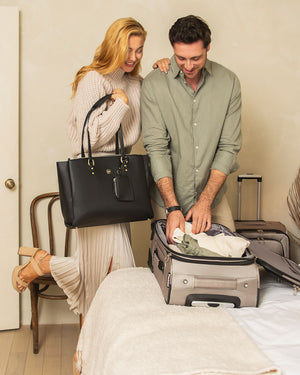


Choose hardside luggage for impact protection, a clamshell packing layout, and a shell you can wipe clean. Choose softside luggage for exterior pockets, expansion room, and a bag that flexes into a packed trunk or a tight overhead bin. Hardside resists compression better. Softside resists abrasion better. Both hold up when they are built well, so the real question is how you travel.
Hardside vs. softside luggage at a glance
|
|
Hardside |
Softside |
|
Exterior |
Molded shell (polycarbonate, ABS, polypropylene) |
Fabric panels over an internal frame |
|
Opening |
Clamshell, two equal halves |
Single-panel lid, one deep compartment |
|
Exterior pockets |
Rare |
Common, usually front-facing |
|
Expansion |
Limited, capacity stays fixed |
Expansion zipper on many models |
|
Best at resisting |
Compression and impact |
Abrasion and flexing |
|
Cleaning |
Wipe down |
Spot clean the fabric |
|
Opens in a small hotel room |
Needs floor space for both halves |
Yes, the lid takes little room |
|
Shows wear as |
Scuffs, scratches, dents |
Fabric scuffs, stains, fraying |
Start with how you actually travel
You decide it is time for a new suitcase. Maybe your old carry-on has seen one too many overhead bins. Maybe your checked bag wobbles through the terminal like it has a story to tell. So you open a few shopping tabs, compare a few travel bags, and land on a bigger decision than you expected.
Both suitcase types have real strengths. Both pack easily and last when they are built well. The right choice depends less on which one wins in general and more on your habits: work trips or family vacations, a neat interior or flexible outside pockets, souvenirs on the way home or a three-day trip that somehow fits in a backpack.
There is plenty of overlap, too. Many modern hardside bags run lighter than older models, and many softside bags use durable fabrics and reinforced corners. This guide breaks the decision down in practical terms.
What is hardside luggage?
Hardside luggage uses a rigid outer shell, usually plastic, ABS, polypropylene, or a blend. The shell holds its shape and protects what you pack.
A hardside suitcase opens in a clamshell design. It splits into two roughly equal halves so you pack both sides separately.
Common hardside features:
• Rigid outer shell
• Clean, modern silhouette
• Interior divider panels
• Compression straps or zip pockets
• Spinner wheels
• Telescoping handle
• TSA-friendly lock on many models
This style suits travelers who want a polished look and a protective shell. Browse the full range in hardside luggage.
What is softside luggage?
Softside luggage uses fabric panels, often polyester, nylon, or woven blends. It still holds structure, but the exterior flexes where a hard shell will not.
Most softside suitcases open with a single-panel lid, like a traditional suitcase. The main compartment is one deep packing space, with smaller pockets inside and out.
Common softside features:
• Flexible fabric exterior
• Front zip pockets
• Expansion zippers
• Interior organization pockets
• Reinforced corners or scuff guards
• Spinner or inline wheels
• Telescoping handle
• Lightweight construction options
Softside appeals to travelers who want quick-access storage and a bag that gives a little when packed full. Browse the full range in softside luggage.
Is hardside or softside luggage more durable?
It depends on the kind of durability you need.
Hardside luggage uses a molded shell. Polycarbonate runs light and takes impacts well, ABS usually costs less, and polypropylene lands between the two depending on the design. The shell keeps its shape and shields what you pack.
Softside luggage uses fabric panels with internal frames and reinforcements. Higher-denier fabrics, reinforced stitching, and corner guards all improve wear resistance.
Hardside bags hold up best against compression and impact. Softside bags shrug off abrasion, flex under pressure, and absorb the everyday bumps of travel. A quality version of either style performs. A poor version of either style disappoints fast.
So ask a better question: what does your suitcase actually have to survive? If it gets checked, stacked, and handled by a dozen people, a hard shell earns its keep. If you drag it through parking lots, hotel hallways, and road-trip stops, a tough softside exterior may serve you better.
Does hardside luggage crack or scratch?
Hardside does not mean unbreakable. A shell can pick up scratches, scuffs, or dents over time. Some materials flex and bounce back, others crack under extreme force. Build quality decides it.
Softside shows wear differently, through fabric scuffs, stains, or fraying under heavy use. Many people find that easier to live with, because small marks disappear into the texture.
For most travelers, durable luggage comes down to the details rather than the shell:
• Do the wheels roll smoothly and feel sturdy?
• Does the handle feel stable when fully extended?
• Do the zippers move without snagging?
• Are the corners reinforced?
• Does the bag stand upright when packed?
• Does the interior feel well assembled?
Those details show up every time you roll through an airport, lift the bag into a car, or unpack at your destination.
Clamshell vs. single-panel: which layout packs better?
This is where the choice gets personal.
Hardside luggage opens like a book. Each side gets its own packing space, often with dividers or straps. That clamshell layout works well if you separate items by category:
• Clothes on one side, shoes and accessories on the other
• Clean clothes on one side, laundry on the other
• One traveler's things on the left, another's on the right
• Outfits on one side, travel essentials on the other
The tradeoff is floor space. Opening a clamshell fully takes room for both halves, which gets tight in a small hotel room.
Softside luggage opens from the front into one large main compartment. The single-panel lid takes less room, so you unzip, grab what you need, and close it again without laying the whole bag flat.
Quick gut check: when you unpack, do you want everything spread out at once, or one main compartment you dig into? Clear separation points to hardside. Flexible depth points to softside.
Which holds more, hardside or softside?
Softside usually wins on flexible capacity. Many softside suitcases include expansion zippers that add packing room, and the fabric gives a little when you wedge in a sweatshirt, a book, or a souvenir that was definitely smaller in the shop.
Hardside luggage offers expansion on some models, but the rigid shell limits how far the bag flexes. Capacity stays more defined. Some travelers count that as a benefit because it discourages overpacking. Others find it restrictive.
If you routinely come home with more than you left with, softside forgives more. If you want a bag that keeps you honest, hardside sets the boundary for you.
Packing tips that work for either:
• Use packing cubes to organize outfits and compress clothing.
• Place heavier items near the wheelbase so the bag rolls balanced.
• Seal liquids in a pouch, even inside a protected compartment.
• Stuff socks and small items into your shoes.
• Leave a little room if you plan to shop.
Exterior pockets and quick access
This one goes to softside, clearly.
Softside luggage commonly includes exterior front pockets, which hold the things you need before you reach the hotel room:
• Travel documents
• Chargers
• A book or magazine
• A light jacket
• Toiletry pouch
• Snacks
• Headphones
If you like grabbing things at the gate, in the car, or at check-in, those pockets earn their place.
Hardside luggage carries fewer outside pockets, especially in traditional shell designs. That clean exterior is part of the appeal, and it means you lean on a personal item, backpack, or tote for quick-access gear.
So ask yourself: should the suitcase be your main organizer, or do you already carry a well-stocked personal bag? If your backpack handles quick access, hardside works beautifully. If you want one more pocket, softside is your match.

Which is lighter, hardside or softside luggage?
Weight used to be a simple comparison. Softside ran lighter, hardside ran heavier. That gap has closed. Many modern hardside shells come in light, and many softside bags add reinforcements and pockets that put weight back on.
General patterns still hold. Hardside feels balanced because the structure spreads evenly across the shell. Softside often feels lighter to lift, depending on the model and frame.
Weight matters differently by bag. On a carry-on, it decides whether you can lift the bag overhead and whether you clear airline limits. On checked luggage, a heavy empty bag eats into the allowance you wanted for actual clothing.
When you compare lightweight luggage, look past the number on the tag:
• Empty weight
• Wheel quality
• Handle comfort
• Balance when packed
• Whether it tips forward with the front pockets full
• How easily it lifts by the top and side handles
A bag that rolls smoothly and stands steady beats one that weighs less and handles awkwardly.
Weather resistance and cleaning
Hardside handles light rain, spills, and dirty surfaces well, because you wipe the shell clean. Splashed at the curb or scuffed in transit, it usually needs nothing more than a cloth.
Softside fabric absorbs moisture more readily than a hard shell, and stains take more care to lift. Tightly woven fabrics help, but the cleaning job is different in kind.
If you travel in wet climates, take ground transportation in unpredictable weather, or store your bag where it collects dust, hardside stays easier to maintain. If most of your travel runs airport to hotel, either style manages fine with basic care.
Style and professional appearance
Style is subjective, and it still matters. Your luggage is the first thing you carry into a trip.
Hardside looks sleek, structured, and modern. It comes in a wide range of colors and finishes, which makes a distinctive one easy to spot on a carousel.
Softside looks classic, practical, and business-friendly. The fabric textures pair naturally with briefcases, backpacks, and other travel bags.
And yes: if your current suitcase is black, rectangular, and identical to 47 other bags on the carousel, add a luggage tag or pick a more recognizable color next time. Future you, standing at baggage claim, will be grateful.
Which is better for different types of travelers?
Frequent flyers
Frequent flyers often favor hardside for the protective shell and polished look, especially in a carry-on. Softside competes well when quick-access pockets and flexible packing matter more than a rigid exterior.
Family travelers
Families lean softside, because exterior pockets and expandable compartments absorb the extras: snacks, layers, toys, backup outfits, and the mystery items that appear mid-trip. Hardside earns its place when two people share one suitcase and want their halves separate.
Business travelers
Business travelers often prefer hardside for the structured packing and clean exterior. Softside serves better when you need documents, a light jacket, or tech accessories in hand between airports, hotels, and meetings.
Road trippers
Softside flexes into a packed trunk, and the exterior pockets help when you stop often. Hardside still works if you want more protection or cleaner stacking.
Overpackers
Softside forgives more, thanks to expansion and flexible fabric. If you want to become a more disciplined packer, hardside sets limits for you. Consider it the suitcase equivalent of a friendly coach asking whether you really need a fourth pair of shoes.
Minimalists
Hardside suits minimalists: clean shape, organized halves, streamlined exterior. A lightweight hardside carry-on pairs well with short trips and efficient packing.
Pros and cons of hardside luggage
Pros
• Structured shell protects packed items
• Sleek, modern appearance
• Wipes clean easily
• Clamshell opening supports organized packing
• Defined compartments on both halves
• Fixed capacity discourages overpacking
Cons
• Fewer exterior pockets
• Needs more floor space to open fully
• Shell shows scuffs and scratches
• Less flexible in tight storage
• Capacity stays more fixed than many softside options
Pros and cons of softside luggage
Pros
• Flexible exterior adapts to tight spaces
• Exterior pockets give quick access
• Expandable packing capacity on many models
• Single-panel opening works in smaller rooms
• Handles bulky or oddly shaped items
• Classic, practical travel look
Cons
• Fabric takes more care to clean
• Less rigid protection than a hard shell
• Front-heavy when the exterior pockets get overfilled
• Fabric shows wear over time
• Contents compress more under pressure
A simple decision checklist
Still deciding? Pick the list that sounds more like you.
Lean hardside if:
• You like a clean, modern suitcase
• You want a rigid shell around your things
• You use packing cubes or want divided compartments
• You do not need exterior pockets on the suitcase itself
• You want something you can wipe down after a trip
• You usually pack within a set limit
Lean softside if:
• You want front pockets for quick access
• You use expansion space often
• You pack bulky layers or awkward items
• You prefer one deep main compartment
• You travel by car frequently
• You want a bag that flexes slightly in storage
The bottom line
Both suitcase types perform. The best choice comes down to your packing habits, your destinations, and how you move.
Want structure, protection, and a polished finish? Go hardside. Want flexibility, easy-access pockets, and expandable storage? Go softside.
Before you buy, think about your last three trips. What annoyed you about your old suitcase? Not enough pockets? Too hard to clean? Too cramped? Too bulky? That answer points at your next bag.
Whether you build a full luggage set or replace one trusted carry-on, focus on the features that smooth out travel: durable construction, comfortable handles, smooth wheels, practical organization, and a size that fits how you actually pack. The smartest setup often includes both styles, because a weekend flight, a family vacation, and a long-haul trip rarely ask for the same bag.
Compare both side by side in SWISSGEAR luggage, or jump straight to hardside or softside. Every SWISSGEAR suitcase carries a 10-year limited warranty.
FAQs
What is the quickest way to decide between hardside and softside luggage?
Choose hardside for a structured shell, impact protection, and a clamshell layout. Choose softside for flexible fabric, outside pockets, extra room, and an easier fit in tight spaces. Start with which of those two lists describes your last trip.
Which is more durable, hardside or softside luggage?
Neither wins outright, because they resist different things. Hardside handles compression and impact best, which matters for checked bags that get stacked and thrown. Softside handles abrasion and everyday bumps better, which matters on road trips and hallway drags.
Which packs better in a small hotel room?
Softside, because the single-panel lid opens into one deep compartment without needing floor space. Hardside splits into two equal halves, which organizes better (clothes and shoes, clean and laundry, or two travelers sharing one case) but needs room to lay flat.
I overpack and bring home souvenirs. Which should I choose?
Softside, usually. Expansion zippers add capacity and the fabric gives a little for last-minute extras. Hardside holds its shape and keeps capacity defined, which helps if you want to pack less rather than fit more.
Beyond hard vs. soft, what should I compare before buying?
The everyday details decide whether you like the bag in year three. Check the wheels for smooth, sturdy rolling; the handle for a steady feel when extended; the zippers for easy movement without snagging; the corners for reinforcement; and the balance, so the bag stands upright when packed and does not tip with full front pockets.